
Wire rope engineering balances competing demands for performance, durability, and cost while revealing broader issues affecting machine health.
by Jonathan Rowland
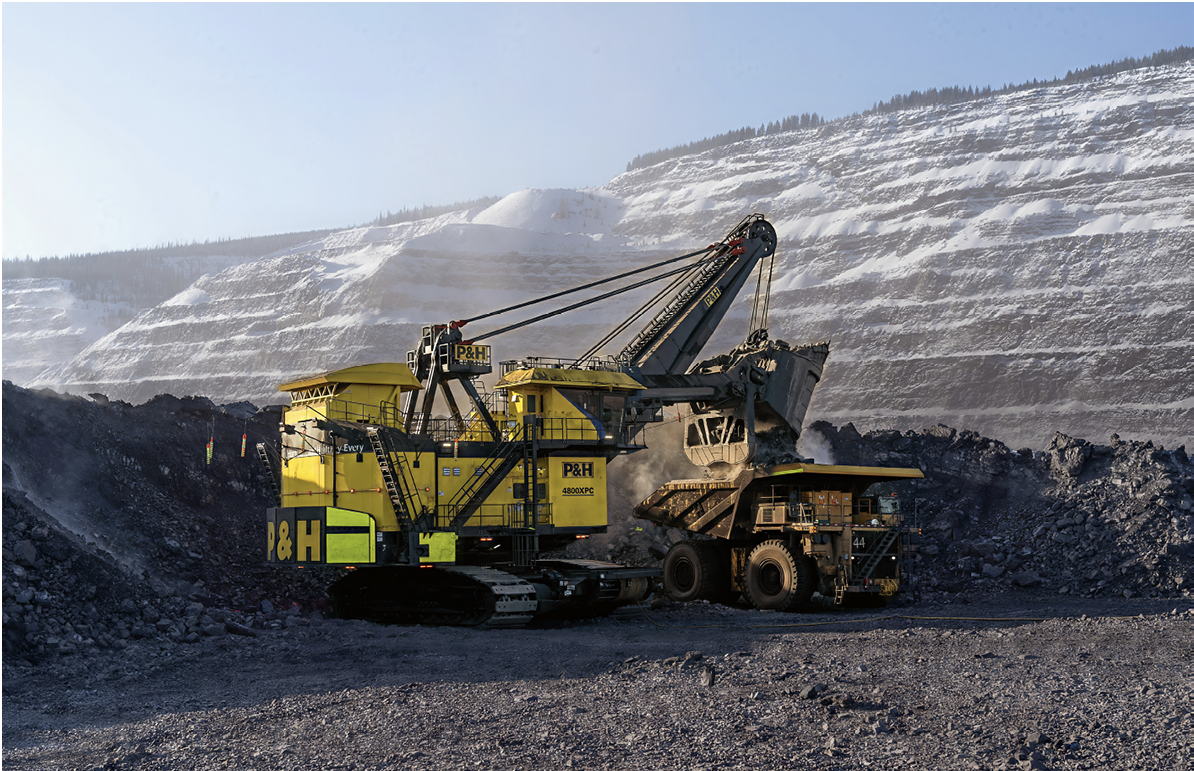
Lift. Lower. Lift. Lower. The life of the wire ropes that give electric rope shovels their name might seem an exercise in simplicity. In reality, these are highly engineered components that do far more than meets the casual eye: they transmit power, absorb dynamic loads, and serve as sensitive indicators of overall machine health.
As mines pursue higher productivity from existing fleets and implement semi-autonomous operating systems, this complexity is being thrown into sharp relief. Getting engineering decisions on rope selection, maintenance and monitoring right can mean the difference between predictable productivity and costly downtime.
ENGINEERING THE SYSTEM
“While ropes may appear to be relatively simple components, they are in fact highly engineered elements that transmit both power and structural loads throughout the machine,” explained Joe Colwell, Engineering Fellow, Shovel Engineering at Komatsu. The hoist rope, in particular, plays a central role in shovel performance, transmitting most of the machine’s power to the dipper while interacting with the hoist drums, boom-point sheaves, and dipper mechanisms – thereby cascading effects throughout the entire machine design.
The high power density of modern electric rope shovels has driven the development of specialized engineering solutions. Komatsu’s approach, for example, uses four parallel ropes sharing the load on a single-layer hoist drum: a design that, according to Colwell, maximizes rope life while efficiently using limited deck space. But this solution represents just one element of a complex optimization challenge.
“Hoist drums are optimized to support rope fatigue life, with close attention paid to parameters such as drum diameter, fleet and wrap angles, groove geometry, spacing and hardness, and end termination design,” Colwell noted. “These features must work together to manage bending fatigue and wear as the rope cycles continuously on and off the drum.”
The interconnected nature of these systems means seemingly straightforward improvements can trigger unexpected complications. “When specifying wire rope for large electric shovels or draglines, OEMs are always balancing system-level trade-offs between wire rope diameter, wire rope construction, and expected service life,” explained Brent Dein, Technical Services engineering manager at WireCo. So, while increasing rope diameter generally improves fatigue life and damage tolerance, the cascading impacts extend well beyond the rope itself.
“Larger wire ropes require larger drums and sheaves, higher torque motors, increased structural mass, and higher manufacturing costs,” Dein continued. The question then becomes whether the operational gains, such as improved availability, longer replacement intervals, and reduced maintenance intervention, justify the added cost and complexity.
Construction type adds another dimension to the optimization puzzle. Strand design, compaction, and whether the rope is plastic-extruded all influence bending fatigue performance, abrasion resistance, and maintenance requirements. “These design choices affect not only wire rope life, but also how forgiving the wire rope is to real-world operating conditions,” Dein said. Even after rope and component sizes are selected, service life can vary dramatically based on groove geometry, pitch, and tolerance control. Within these fixed constraints, rope manufacturers must engineer constructions that perform optimally while guiding end users toward designs that deliver consistent performance within the realities of their operating environment.
“At the end of the day, the mine operator wants a product that performs reliably so that they can plan their operations accordingly,” Dein continued. “Designing wire ropes and rope systems to minimize the effects of everyday shovel operation is going to give the operators the best customer experience.”
WHEN ROPES REVEAL MACHINE PROBLEMS
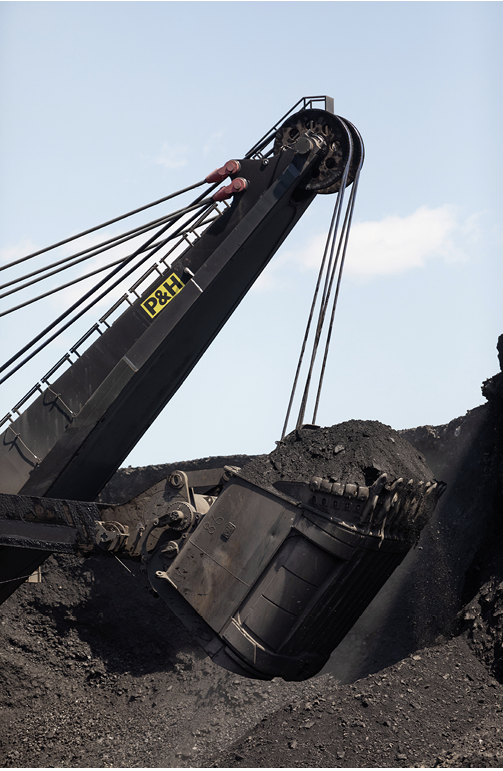
Wire rope condition can often serve as a sensitive diagnostic tool for broader machine health issues. “Mining sites and wire rope engineers distinguish between rope-related and machine-related issues by evaluating where the damage occurs, how consistently it appears, and whether it repeats on successive ropes,” Dein explained. Isolated damage tied to specific operating conditions often points to external or procedural causes, while consistent, repeatable wear patterns across multiple ropes typically indicate an underlying machine condition.
As an example, some of the most frequent rope failures on electric shovels occur near the bail, caused by mechanical damage from rock contact or aggressive digging practices. “In these cases, remedies typically include improving blasting practices, changing digging technique, or using rope protection technology, such as WireCo’s Gladiator Shield, a patented system that helps guard against damage at the bail,” said Dein. These protective sleeves are installed during fabrication, allowing ropes to arrive at the site ready for installation while helping protect against unplanned downtime.
Other wear patterns point more directly to machine issues. Sharp cuts or slicing in the plastic coating on the rope spooling onto the drum may indicate excessively worn, sharp grooves between drum wraps. Meanwhile, long areas of abraded plastic and wires, or flattened ropes, can signal that the rope is rubbing against something in the load path that the OEM did not intend.
GETTING MAINTENANCE RIGHT
Despite technological advances in rope design and monitoring, maintenance practices remain a critical variable in achieving optimal performance. For example, the industry’s transition to plastic-extruded ropes has eliminated one historically critical maintenance task: routine relubrication. However, this improvement has created an unexpected pitfall. “One of the most common mistakes we see in North American surface mining is assuming that modern wire rope designs eliminate the need for broader system maintenance,” Dein noted, emphasizing that getting maintenance right means maintaining the entire rope system, not just the rope itself. “When you do so, you achieve longer wire rope life, fewer unplanned outages, and more predictable maintenance intervals.”
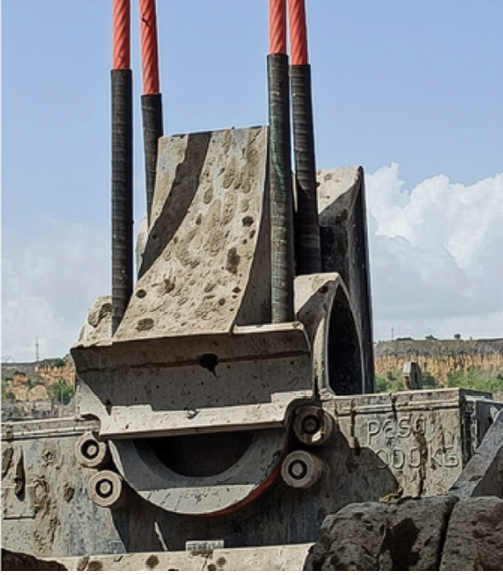
According to the WireCo expert, it is not uncommon to see steel structures within the load path worn or grooved to the rope’s diameter from repeated contact. While many mines have addressed this by installing replaceable HDPE wear blocks or rollers, these components eventually wear out. “As rollers become grooved, they may stop rotating entirely, exposing the underlying steel shaft and accelerating wear on both rope and structure.”
Many mines still replace hoist ropes based on tons of material moved or machine hours, typically aligning with planned maintenance intervals about every two months. Rope condition monitoring largely depends on visual inspection, with most failures originating from damage near the bail and dipper or from fatigue accumulated on the hoist drum, according to Komatsu’s Colwell. However, recent advancements in data analytics are beginning to provide insights into remaining rope life through bending-fatigue life calculations. For example, Komatsu’s approach combines traditional inspection with modern data monitoring through its Modular Technology Solutions (MTS) platform, which records nearly a thousand data streams.
“The Komatsu Mining Application Tool (KMAP) has the ability to sense hoist rope changes and evaluate remaining hoist rope life based on the number of productive cycles and the cumulative fatigue damage based on the loading during each individual cycle,” Colwell explained. “This tool, when combined with visual inspections, can help a mine extend hoist rope life and schedule replacements in a more efficient manner.”
OEMs have also focused on reducing downtime for smaller yet critical rope systems. While the dipper trip rope itself is relatively small and not a major cost driver, downtime from trip adjustments or rope damage can have a disproportionate impact on productivity. “Recent innovations, such as the low-inertia TripRite drive, a handle-mounted trip drum, and the P&H roller latch system, have dramatically improved dipper trip rope life,” Colwell noted. “In some applications, rope life has increased from roughly one month to more than a year, delivering meaningful gains in machine availability, reliability, and consistent digging performance.”
THE AUTONOMOUS FUTURE
As the industry moves toward semi-autonomous and eventually fully autonomous shovel operations, rope engineering faces both opportunities and uncertainties. Current machines already incorporate software-based features such as Automatic Boom Soft Set Down (ABSS), which detects inadvertent boom jacking and automatically lowers the boom in a controlled manner to limit impact loads on the boom and suspension ropes.
Meanwhile, slack rope detection systems monitor conditions where the machine begins to ‘push’ the rope, creating slack on the drum. These systems then take corrective action to reduce the risk of consequential damage. Additional functions within adaptive control suites focus on smoothing the digging cycle, helping reduce peak loads and impact energy throughout the machine. “These improvements have direct benefits for suspension and hoist ropes by reducing fatigue-related damage while providing higher machine productivity,” Colwell said. “As smart, semi-autonomous capabilities continue to advance, they are expected to improve shovel operations and positively impact rope performance and overall machine reliability.”
From the rope manufacturer’s perspective, however, autonomous operation introduces important questions about operating philosophy. “Will autonomous shovels prioritize smoother operation,” asked Dein, “or will they be programmed to maximize speed and production at the expense of increased wear on wire ropes and other machine components?”
Yet Dein also recognized a significant advantage of autonomy: consistency. “Operating under repeatable conditions will give mine operators the opportunity to truly partner with their wire rope supplier to use operational data, work calculations, and a forensic examination program for retired wire ropes to develop predictable replacement cycles,” he added. “Over time and with the right partnerships, this consistency will enable more accurate life forecasting and improved total cost of ownership.”
LOOKING FORWARD
There is a “sense of anticipation across the industry regarding the future of rope technology,” concluded Colwell, “with many mining professionals expressing openness to adopting innovative approaches.” However, success – both in current and future operations – requires an understanding that rope performance cannot be separated from broader machine health. As the Komatsu engineer put it, “rope system design illustrates a broader truth about electric rope shovels: every major component is interconnected.” Decisions made to improve rope performance must thus be evaluated in the context of the entire machine, balancing technical performance with practical constraints to deliver a reliable, maintainable, and cost-effective solution for the mine site.
For operators, the path forward involves maintaining focus on proper system maintenance, regular inspections and informed specification decisions, while leveraging new data analytics capabilities and semi-autonomous features. The mines that succeed will be those that view rope systems not as consumables to be replaced on schedule, but as sophisticated engineering components that, when properly specified and maintained, can deliver measurable gains in availability, productivity and total cost of ownership.